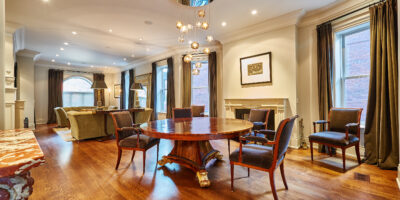
Formal dining rooms often become a catchall for junk. The table becomes a makeshift office, stacked high with paperwork. The china cabinet becomes the craft cabinet, and the corners are crammed with old toys and under-used exercise equipment.
“Most people are mentally making their decisions to buy based on the listing photos,” says professional stager Jenn McCormac with Carousel Home Staging. “A clean, simple dining room will show well on camera, and make buyers want to come see your property. But a dining room with a desk, office gear, and toys will feel cluttered and confuse your buyer.”
Anything that doesn’t naturally belong in your dining room needs to be packed or tossed, and that includes personal items.
Pack away all of those family photos on the sideboard, that wooden sign featuring your surname on the wall, and those handprint plates your kids made that are displayed in the china cabinet.
When buyers come for a showing or look at your home’s photos online, you want them to envision themselves sitting around the table with family — not wondering about the dining habits of the family that already lives there.
Plus, if your dining room shows signs that you don’t use it, chances are buyers will think that they don’t need the space either.
Deep clean all surfaces and furniture
When you’re prepping your dining room to host your next holiday get-together, you probably have a go-to plan of attack. Brush the crumbs off of the chairs, run a duster over the buffet, slap on a tablecloth to cover the waxy buildup on your dining table’s finish — and you’re good to go.
That level of cleaning may suffice when you’re hosting a family gathering, but when the guests are potentially your home’s future owners, you’re going to want to amp up the effort.
Before you list your home, the dining room needs a thorough, crown molding to baseboard (and everything in between), deep cleaning.
For starters, grab a clean mop with a new head, a bucket of hot water made sudsy with a little dish soap and get to work wiping away those splatters, stains, and fingerprints on the moldings, walls, and baseboards.
Tackle particularly stubborn marks, like crayon scribbles or shoe scuffs with tools specifically designed for the job, like the Mr. Clean Magic Eraser mop. Keep the dust away from your dining room’s moldings and baseboards for the duration of the home sale by running a fabric softener dryer sheet over them.
Finish off the floors by cleaning them with the appropriate tools, cleaning solutions, and techniques for your specific floor type.
Next, it’s time to take on the furniture. To remove water rings or other stubborn stains, you can use household products you have around the house, like baking soda, toothpaste, or salt.
If your dining table and chairs are solid hardwood, the smartest choice to clean them is a silicone-free furniture polish that won’t leave a waxy residue. Restore the look and life of older hardwood dining sets with a furniture oil that both polishes and conditions.
Between dried, caked-on food and beverage stains, cleaning your chair upholstery is the toughest task you’ll take on in the dining room. If your stains are too tough for a standard upholstery cleaner, you may need to rent or buy a carpet cleaner that comes with upholstery attachments. For fabric that’s too far gone, recovering your dining chairs may be your best option. Luckily, dining chairs are easier to reupholster than most furniture, so if you DIY the project, it’ll only cost the price of the upholstery fabric, staples, and extra padding where needed.