
Key takeaways:
Spring is in full swing, kicking off the prime homebuying season. So, many homebuyers are wondering if it’s a good time to enter the housing market.
Housing remains largely unaffordable for most of the country, after all, and economic uncertainty is significantly slowing the market. More sellers are holding off, and buyers are increasingly unwilling to spend big. As a result, the industry’s busiest months are off to a sluggish start. It’s no surprise that many are questioning if now is the right time to take the leap.
In short, whether or not it’s a good time to buy a house boils down to if it’s a good time for you to buy a house. Let’s dive a bit deeper into market trends to help you answer, “Should I buy a house now or wait?”
From Redfin’s Chief Economist
“Now is a good time to buy, if you can afford it. Prices are climbing and mortgage rates are high, but there is also significantly more inventory, giving buyers an upper hand in negotiation. A volatile economy is making everyone uneasy, though, leading to a sluggish market. Buyers serious about making offers should be confident in their finances and future income.” – Daryl Fairweather, Redfin Chief Economist.
What buyers need to know about the housing market
Here are some key market trends to keep an eye on and help you make an informed homebuying choice.
House prices are high but could fall soon
The median U.S. sale price is $442,000 – up 0.9% from a year ago. House prices have posted year-over-year gains for 23 consecutive months and are 33% higher than they were in 2020. Monthly housing costs have sat in record territory for months.
Years of underbuilding and subsequent low inventory have been the primary drivers behind these record prices.
However, price growth has slowed recently due to rising inventory and falling home sales. Now, Redfin predicts that these trends will push prices down by the end of the year – the first drop since 2023. This will make homebuying more affordable, because wages are expected to rise.
If you’re planning to buy, moving soon could help you take advantage of lower competition.
>> Read: Redfin’s 2025 Housing Market Predictions
Mortgage rates are elevated and volatile
As of June 3rd, daily average 30-year fixed mortgage rates sit at 6.95% – unchanged from last week. Rates remain elevated due to persistently high inflation, uneasy economy, and strong job market.
“Tariffs, a possible recession, and market turmoil means buyers should expect mortgage rates to remain volatile and high for the foreseeable future,” cautioned Chen Zhao, Head of Economics Research at Redfin. “Court rulings could soon reverse the Trump Administration’s April 2nd tariffs, but rates are unlikely to fall unless all tariffs since inauguration day are called off. That being said, even small dips will be a welcome break for homebuyers.”
Redfin predicts that mortgage rates will hover between 6-7% this year.
How mortgage rates affect housing costs
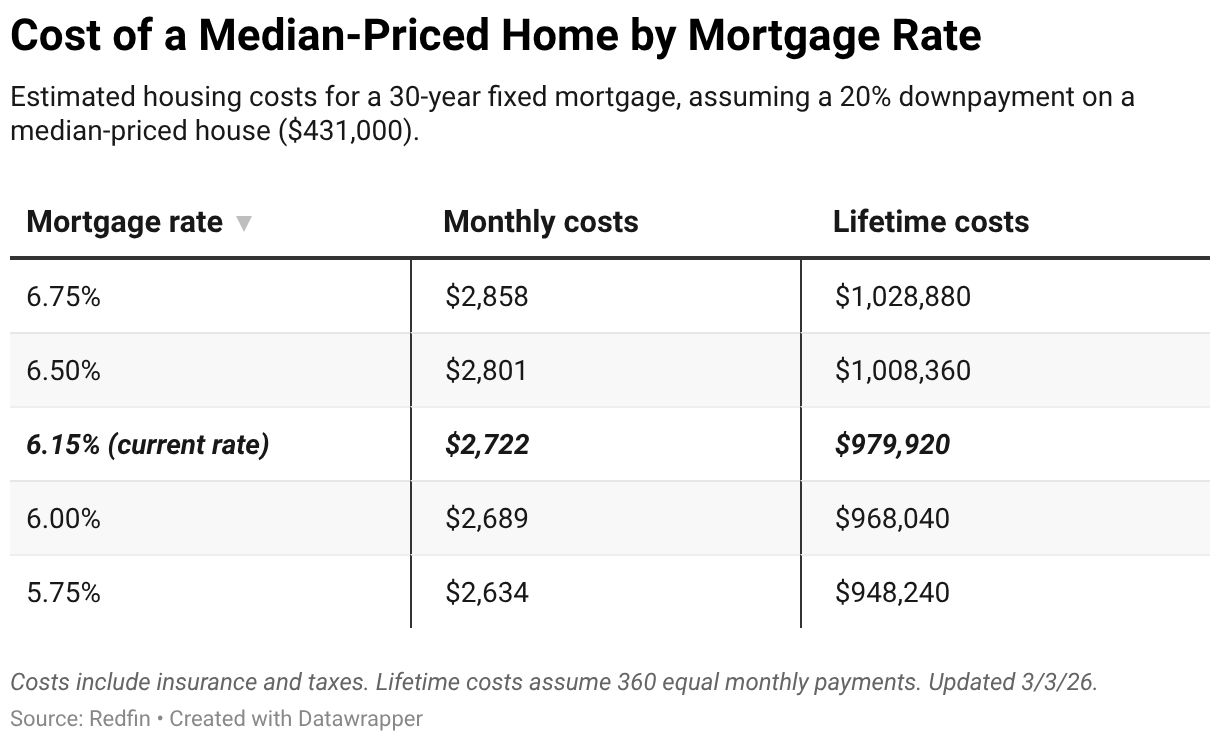
Mortgage rates are important for buyers because they directly translate to monthly housing costs. The higher the rate, the more you pay every month. If rates drop, you can save tens of thousands over the lifetime of your mortgage.
Let’s see how your monthly payments change with different rates, using data from our Mortgage Calculator.
Buyers have the upper hand
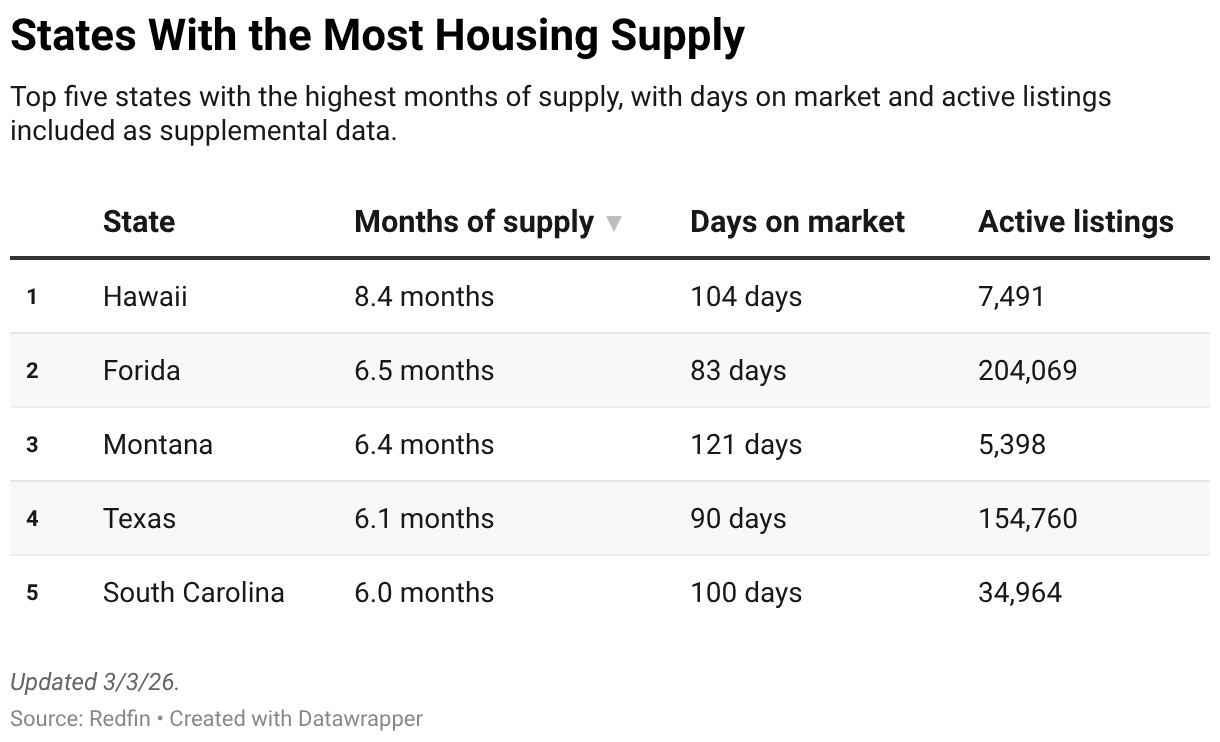
It’s a buyer’s market for the first time in years: Housing inventory is rising across the country – especially in the South – giving buyers more negotiating power. However, supply is still very low in parts of the Midwest and East Coast, putting sellers in charge and pushing up prices.
In general, high costs are keeping buyers on the sidelines and freezing home sales. Let’s dive a bit deeper into the data and look at two key indicators.
Inventory is at a five-year high
There are more homes for sale in the U.S. today than there have been since the start of the pandemic – nearly $700 billion worth. Florida and Texas have the most homes on the market today, by far. This is the primary driver behind today’s buyer’s market.
Housing inventory is rising because more sellers are listing their homes, with some of the largest increases in disaster-prone areas like Florida. In fact, local Florida experts believe a market correction – where home prices fall to better reflect local incomes and demand – could be in store.
Rising inventory is the primary driver behind today’s buyer’s market. Those who can afford to buy may be in a better position to receive concessions.
Demand is near an all-time low
Even with more homes on the market, buyer demand remains sluggish due to high housing costs and economic uncertainty – especially in markets like Austin and Tampa. For buyers who have the budget, this could be a good time to enter the market, as sellers may be more open to negotiation.
Still, there are exceptions. In some Midwest cities like Milwaukee and Detroit, strong demand for affordable homes is pushing prices up and putting sellers in charge.
>> Read: How to Sell Your House in 2025: A Comprehensive Guide
Inflation could come back
Critical to the housing market, the Fed and economists are concerned about inflation coming back, which would impact mortgage rates. Plus, due to the evolving tariff situation, they fear that “stagflation” – a combination of slow growth and rising inflation – could set in.
Inflation has major implications for buyers. Most importantly, it can lead to higher house prices and mortgage rates, and stretch budgets further. If inflation does tick back up, borrowing could get more expensive, making now a smart time to lock in a rate before that happens.
All-cash buyers hoping to avoid mortgages altogether should act now to avoid potential price increases.
>> Read: A Housing Market Under Donald Trump: What It Could Mean for Buyers, Sellers, and Renters
How to buy in an uncertain economy
With tariffs, economic whiplash, and volatile mortgage rates, many buyers are wary of getting into the market. Here are a few tips from our economists about navigating this shifting landscape.
- Stick to your budget: This isn’t the time to stretch financially. With recession odds hovering around 50% and economic uncertainty rising, make sure you have enough in savings to cover mortgage payments if your income changes.
- Negotiate, negotiate: The market favors buyers, so use your leverage. There’s more inventory, and sale prices are increasingly coming in below asking.
- Be smart about rates: Mortgage rates are unpredictable. Shop around, compare lenders, and ask about “float down” options if rates drop significantly after you lock in. You can always refinance later if needed.
- Sell before you buy: If you own a home, consider selling it first. It will give you a clearer budget and help you avoid the risk of carrying two mortgages.
>> Read: How to Buy, Sell or Rent a Home Amid Economic Uncertainty
Personal considerations: Are you ready to buy and own a house?
When deciding whether to buy a home in today’s climate, you’ll want to think beyond market conditions and focus on your individual circumstances. Here are some personal considerations to keep in mind.
Financial health
Take stock of your current savings, credit score, and debt levels. Can you afford a house? Or does renting make more sense?
Housing is a long-term commitment, so you’ll want a solid emergency fund – ideally covering 3 to 6 months of expenses – for maintenance and unexpected costs.
Monthly budget
Determine how a mortgage payment at today’s rates might impact your lifestyle. Make sure you can comfortably handle monthly payments, property taxes, insurance, and other homeownership expenses.
Job and location stability
Buying a house makes sense if you plan to stay put for several years. A stable job or reliable income is crucial to avoid financial strain, especially if home prices or interest rates rise further.
Choosing your location is also essential. Is your potential home prone to flooding, wildfires, or other climate risks? This is especially important today, as insurers continue dropping homeowners at alarming rates.
Personal goals and timelines
Think about life events, like starting a family, retiring, or relocating. These factors can make owning a home either more appealing or potentially riskier if you need to move soon.
Lifestyle preferences
Homeownership comes with ongoing responsibilities, like maintenance, repairs, and property taxes. Ask yourself if you have the time, resources, and a desire to handle them.
>> Read: Am I Ready to Buy a House? 8 Questions to Help You Decide
So, is now a good time to buy a house?
If you have the means and are ready to own a home, now is a good time to buy a house. Rates are lower than they were last year, but with today’s economy, it’s hard to know how long they’ll stay that way. Waiting for rates to drop leaves you at risk of competition among buyers and subsequent price hikes from sellers.
In a market this unpredictable, the best approach is to be prepared. Know your budget, connect with an agent, get preapproved, and move quickly if the right home comes along. The longer you wait, the more competition you’ll see – especially if prices fall by the end of the year.