 By admin1
2. Supply and demand
While the combination of improving real estate inventory and lowering mortgage rates results in a softer market, there are still supply and demand variations in each local neighborhood.
The basic law of supply and demand has a major effect on the housing market. Simply put, as the housing supply decreases or as demand rises, this creates an inventory shortage, causing home values to go up. A real estate inventory shortage means that there are fewer sellers than there are buyers.
When a community has less supply, a seller of a desirable home is “going to get top dollar for that home,” Lance says.
Complicating matters, there is also a shortage of the building materials and skilled labor necessary to build new homes.
3. Real estate comps
As the sale prices of comparable properties (known as real estate comps) in your community climb, your property value also climbs. Real estate comps are properties in your neighborhood that have similar age, square footage, materials, features, and condition to your home. Appraisers and real estate agents use comps as part of their process in determining property value or listing price.
When bidding wars occur in a neighborhood, homes sell for higher prices than the previous selling prices of similar homes. This enables sellers to list their homes at higher prices and achieve even higher sale prices if bidding wars continue to occur.
Lance calls this domino effect “pushing the price point,” reflecting on her experience during a hot seller’s market:
“I sold a house at $368,000; then the same floor plan ended up selling at $385,000. And I just went on a listing appointment last week, same floor plan, same community — it was on a side street which is a little more desirable — and I told them to list it at $400,000.”
In this example, if the first home, which was listed at $368,000, had been listed a few months later, their property value would have increased, possibly selling for $390,000 or more, because of comparative sales.
4. Size and usable space of your home
The greater the usable square footage, the greater the home value in the eyes of appraisers and buyers. According to Benson, usable space is defined as the living space and, in some locations, heated living space. The square footage of spaces such as finished basements and attics is typically not included in the calculation of usable space.
But don’t overlook the value of those additional spaces just yet! If you expand your home’s square footage with a home addition, finished attic, or basement, your property value improves to varying degrees. Especially if that additional space can be used for a home office.
“Here in the Seattle area, nine out of 10 homebuyers are remote tech workers, working for Google, Amazon, Microsoft, and they’re looking for homes with extra office space,” Freeman says.
In addition to usable space, home additions that include accessory dwelling units (ADUs) or mother-in-law suites may increase the value of a home by as much as 35%. Freeman suggests that ADUs are in higher demand as families open their homes to elderly parents and adult children. The potential for additional income is an added incentive for homebuyers.
5. Age and condition of your home
Because the physical characteristics of your home depreciate in value, a newer home will have a higher value than an older home. Home appraisers rate your home’s condition based on the amount and degree of repairs required. Benson indicates that a well-maintained older home with a sound foundation and structure, as well as functional systems, will also have a higher value.
Buyers in particular should take note of the home’s age based on the quality and design of materials and fixtures, such as hardware, tile, and energy-efficient features. When you maintain your home from a structural and aesthetic standpoint, you improve your property value.
6. Upgrades and updates
When done strategically, remodeling improves your home’s value and marketability. You might notice that a home that is similar to your home in age, size, and layout has been appraised at a much higher value than your home. The most likely reason is that the home has been upgraded. Homes that have been upgraded with modern features or layouts attract more homebuyers and higher offers.
Some remodeling projects that typically boost value and recoup project costs include:
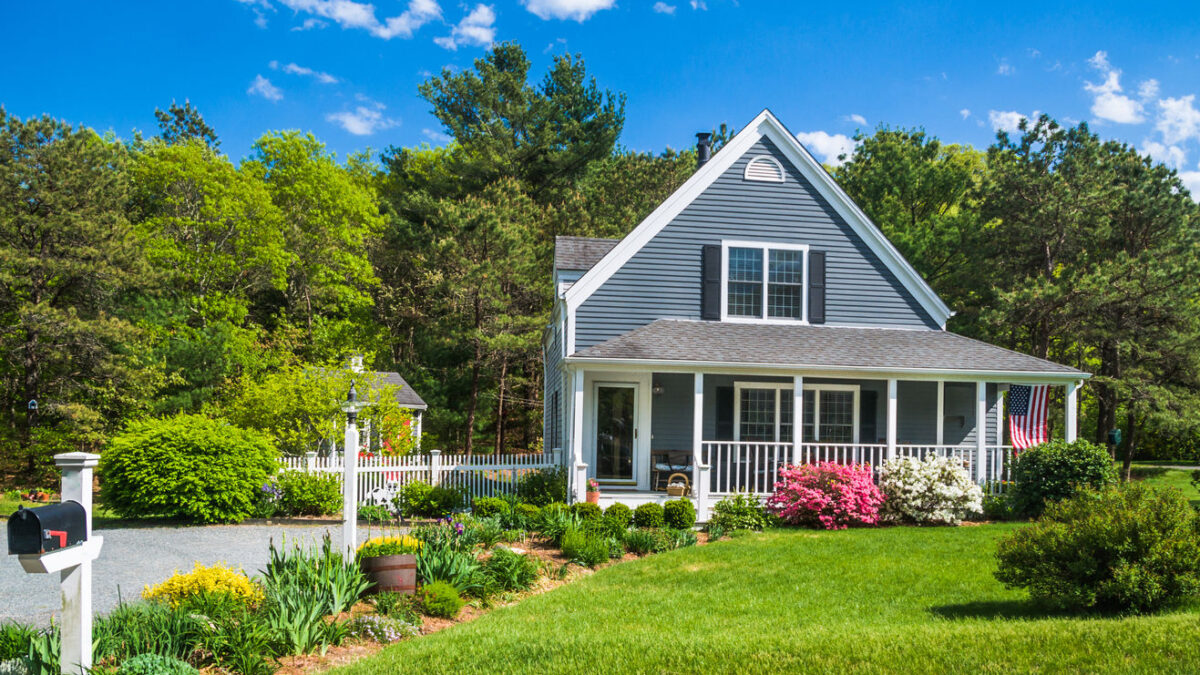
- Landscaping. Lush landscaping raises property value. An attractive lawn alone has a return on investment of 217%.
- Mid-range kitchen remodel. A mid-range minor kitchen remodel recoups 113% of project costs, according to the 2025 Cost vs. Value report.
- New systems. Updating or improving aging systems can increase energy efficiency and resale value. Some value-boosting increases include installing a new HVAC unit, replacing or repairing your roof, installing energy-efficient windows, and installing a new garage door.
- Minor fixture and paint updates. Updated fixtures and paint instantly update your home for a relatively small price tag.